



Digital advertising has evolved rapidly over the past decade, but 2026 marks a defining shift the era of fully AI-driven ad personalization. Businesses are no longer competing merely on ad spend or reach; they are competing on relevance, timing, and user experience. Artificial Intelligence (AI) has become the backbone of modern advertising strategies, enabling brands to deliver hyper-personalized ads that significantly improve engagement and conversion rates.
According to industry studies and platform data trends, AI-powered ad personalization can increase conversion rates by up to 30% or more when implemented correctly. This blog explores how AI personalizes ads, the technologies behind it, and how businesses can leverage AI advertising in 2026 to drive measurable growth.
What Is AI-Powered Ad Personalization?
AI-powered ad personalization refers to the use of machine learning, data analytics, and predictive algorithms to tailor advertisements based on individual user behavior, preferences, intent, and real-time context.
Unlike traditional advertising, where the same message is shown to a broad audience, AI personalization ensures that:
- Different users see different ad creatives
- Messaging adapts to intent and buying stage
- Ads are shown at the most effective time and platform
The result is higher relevance, lower ad waste, and better ROI.
Why Ad Personalization Is Critical in 2026
Consumer behavior in 2026 is defined by:
- Shorter attention spans
- Higher expectations for relevance
- Multi-device and multi-platform journeys
- Privacy-aware but experience-driven decision making
Generic ads no longer work. Users expect brands to understand their needs instantly. AI enables this by processing vast datasets faster and more accurately than human marketers ever could.
How AI Personalizes Ads: Key Mechanisms
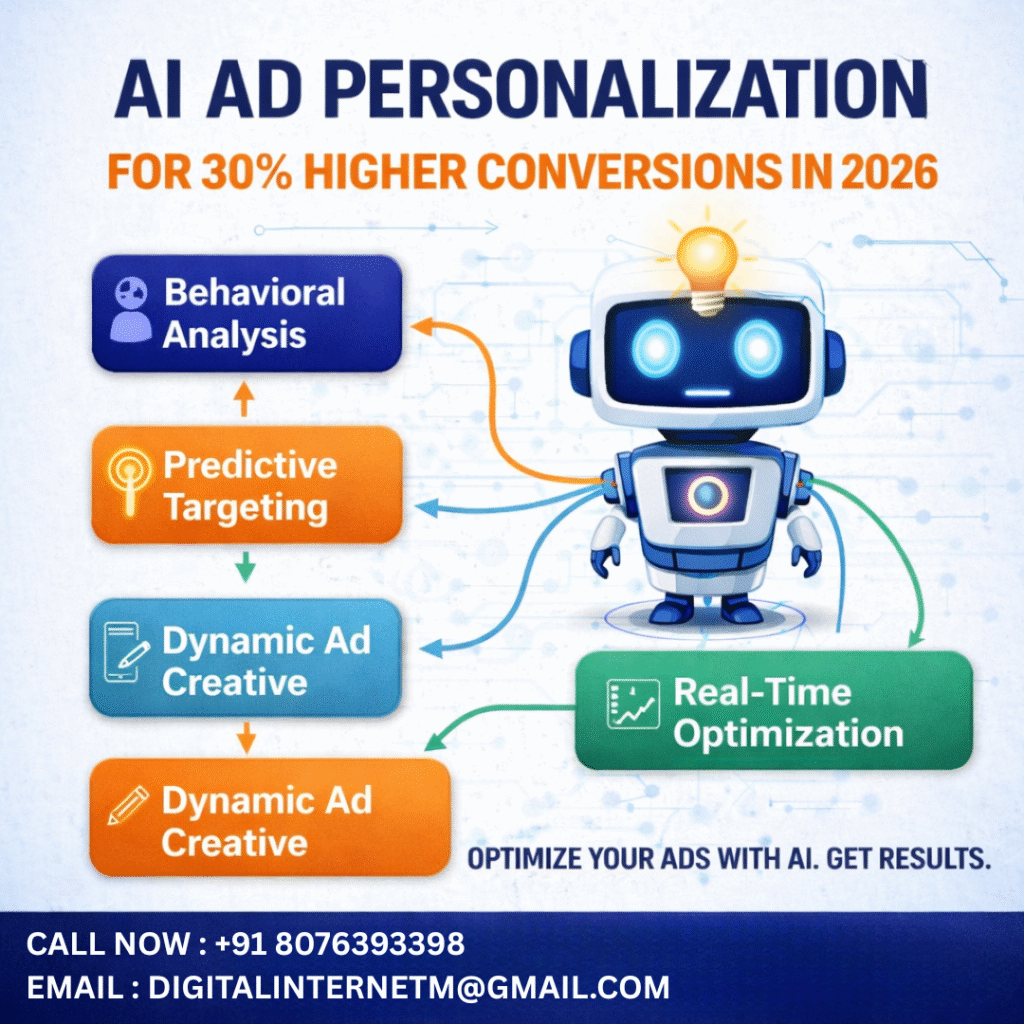
1. Behavioral Data Analysis
AI analyzes multiple behavioral signals, including:
- Search history
- Website interactions
- App usage patterns
- Purchase history
- Engagement with previous ads
Using this data, AI predicts what a user is most likely to respond to next, allowing advertisers to serve high-intent ads rather than generic promotions.
2. Predictive Audience Targeting
AI does not rely only on past behavior it predicts future intent.
For example:
- Users browsing product comparisons are served decision-stage ads
- Users reading blogs are served educational or awareness ads
- Cart abandoners receive dynamic remarketing ads
This predictive targeting significantly improves conversion probability.
3. Dynamic Creative Optimization (DCO)
Dynamic Creative Optimization is one of the most powerful AI-driven personalization tools.
AI automatically adjusts:
- Headlines
- Images
- CTAs
- Offers
- Ad formats
Each user sees a version of the ad optimized specifically for them. This removes guesswork and continuously improves performance through real-time learning.
4. Real-Time Bidding and Budget Optimization
AI algorithms manage:
- Bid adjustments
- Budget allocation across campaigns
- Channel prioritization
Ads are automatically pushed toward high-converting audiences and platforms, ensuring optimal spend utilization. This results in lower cost per conversion and higher overall ROI.
5. Personalization Across Platforms
In 2026, users move seamlessly between:
- Google Search
- YouTube
- E-commerce platforms
AI ensures consistent personalization across channels, creating a unified user experience rather than fragmented messaging.
How AI Delivers 30% Higher Conversions
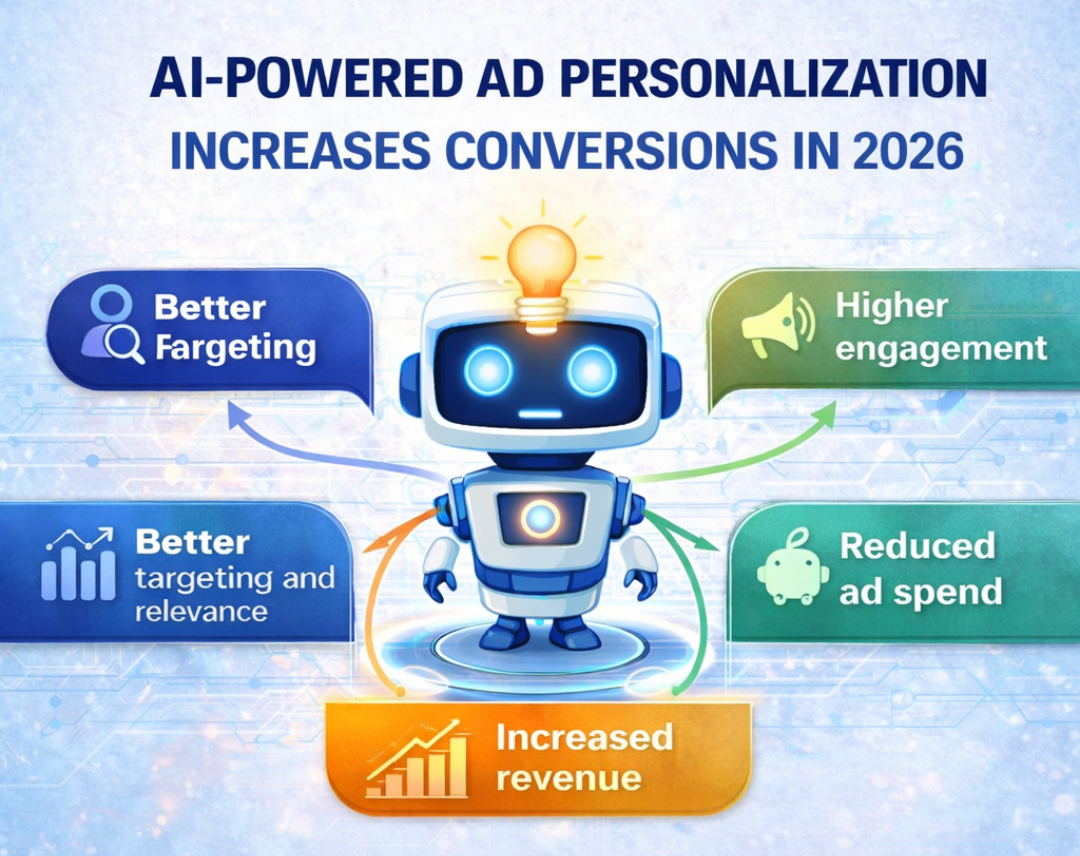
AI personalization improves conversions through a combination of efficiency, relevance, and automation.
1. Right Message, Right User, Right Time
AI eliminates irrelevant impressions, ensuring ads are shown only when users are most likely to act.
2. Reduced Friction in the Buyer Journey
Personalized ads align with user intent, reducing decision time and improving user experience.
3. Continuous Learning and Optimization
AI campaigns improve automatically as more data is collected, unlike static traditional campaigns.
4. Lower Ad Fatigue
Creative rotation and personalization prevent users from seeing the same ads repeatedly.
AI Advertising Use Cases in 2026
- E-commerce: Product recommendations, dynamic pricing ads, cart recovery
- Local Businesses: Hyper-local targeting with intent-based messaging
- B2B: Account-based marketing and personalized LinkedIn ads
- Service Businesses: Lead nurturing through AI-powered remarketing
Challenges and Ethical Considerations
While AI advertising is powerful, it must be implemented responsibly.
Key considerations include:
- Data privacy compliance
- Transparent data usage
- Avoiding over-personalization
- Maintaining brand consistency
- Professional agencies ensure AI is used strategically and ethically, not blindly.
How Digital Internet Marketing Uses AI for Smarter Advertising
At Digital Internet Marketing, AI is integrated into every stage of advertising strategy from audience research to performance optimization.
Our approach includes:
- AI-driven audience segmentation
- Advanced Google Ads and Meta Ads optimization
- Predictive keyword and intent analysis
- AI-powered CRO and landing page optimization
- Continuous performance monitoring and refinement
We focus on data-driven personalization, not automation for the sake of automation.
The Future of AI-Powered Advertising
By 2026 and beyond, AI advertising will move toward:
- Voice and visual search personalization
- Emotion-based ad targeting
- Predictive lifetime value modeling
- Fully automated omnichannel campaigns
Businesses that adopt AI personalization early will dominate visibility, conversions, and customer loyalty.
Conclusion
AI-powered ad personalization is no longer optional it is a competitive necessity. By delivering relevant, timely, and intent-driven ads, AI enables businesses to achieve up to 30% higher conversions while optimizing costs and improving user experience.
However, success depends on strategy, expertise, and continuous optimization. Partnering with an experienced digital marketing agency ensures AI is used effectively to drive sustainable growth.
Frequently Asked Questions (FAQs)
1. How does AI improve ad conversion rates?
AI improves conversions by analyzing user behavior, predicting intent, and delivering personalized ads that match the user’s buying stage.
2. Is AI advertising suitable for small businesses?
Yes. AI helps small businesses optimize limited budgets by focusing on high-intent audiences and reducing ad waste.
3. Does AI replace human marketers?
No. AI supports marketers by handling data analysis and optimization, while strategy and creativity remain human-led.
4. Which platforms use AI-based ad personalization?
Google Ads, Meta Ads, LinkedIn Ads, Amazon Ads, and most major platforms use AI-driven optimization.
5. How long does it take to see results from AI-powered ads?
Most campaigns start showing improved performance within 2–4 weeks as AI systems learn and optimize.
Contact Digital Internet Marketing Today
Ready to scale your business with AI-driven advertising and personalization?
Digital Internet Marketing
📞 Phone/WhatsApp: +91 8076393398
🌐 Website: www.digitalinternetmarketing.in
📧 Email: digitalinternetm@gmail.com
Let data, AI, and strategy work together to grow your brand smarter and faster.